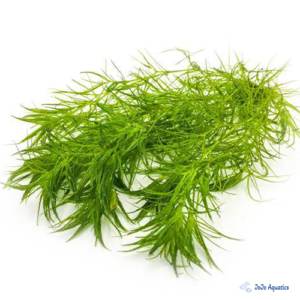
Java Fern Care Guide
Java Fern (Microsorum pteropus) is the plant that has saved more beginner aquariums than any other. It thrives in low light, needs no CO2, and is almost impossible to kill once it settles in. The one rule that trips people up is simple: never bury the rhizome. Tie or glue it to driftwood or stone, give it time, and it slowly spreads into a lush green hand of leaves. This guide covers how to get it right from the start.
Quick Stats
- Scientific name: Microsorum pteropus
- Family: Polypodiaceae
- Origin: Southeast Asia
- Care level: Easy
- Lighting: Low to medium
- CO2: Not required
- Growth rate: Slow
- Placement: Midground, attached to hardscape
- Temperature: 68–82°F
- pH: 6.0–7.5
Planting: never bury the rhizome
This is the only thing you have to get right. Java fern grows from a horizontal rhizome, the firm green stalk that the roots and leaves sprout from. If you bury that rhizome in substrate it rots and the plant dies. Instead, attach it to driftwood, rock, or any hardscape using cotton thread, fishing line, or a dab of cyanoacrylate (super) glue gel. The roots will grip the surface on their own within a few weeks and you can remove the thread.
You can also simply wedge the rhizome into a crevice and let it anchor itself. Because it attaches to surfaces rather than rooting in the ground, java fern is perfect for bare-bottom tanks, hardscape-only layouts, and tanks with diggers or rooting fish that would uproot a planted species.
Light and nutrients
Java fern wants low to medium light. Under bright light it tends to grow algae on its slow-moving leaves rather than growing faster, so resist the urge to blast it. No CO2 is needed. It feeds from the water column, so in a tank with fish it usually gets all it needs from the waste already present; a light dose of liquid fertilizer keeps the leaves deep green in a sparse setup.
Java fern melt and black spots
Two things commonly worry new keepers. The first is melt: when freshly imported or moved, java fern sometimes drops older leaves to clear, mushy patches. This is normal adjustment, not death. Trim the bad leaves, leave the rhizome alone, and new growth follows. The second is small black or brown bumps on the undersides of leaves. These are not disease; they are baby plants. Which brings us to propagation.
Propagation
Java fern propagates two ways. You can cut the rhizome into pieces, each with a few leaves and roots, and attach them as new plants. Easier still, the plant does it for you: those bumps on mature leaves grow into tiny plantlets, complete with leaves and roots. When they are an inch or two across, gently detach them and attach them wherever you like. A single fern slowly becomes a whole collection.
Ordering from us
Plants ship wrapped damp in an insulated box and travel well in moderate weather. Some melt after shipping is normal for java fern, so do not panic if a leaf or two turns clear; the rhizome is what matters and it recovers. Rinse the plant on arrival, attach it to your hardscape, and be patient with this slow grower. As with any new plant, a quarantine or quick dip is good practice. See our Shipping & Acclimation and Water Chemistry guides for details. Questions? Email help@jojoaquatics.com.
— The JoJo Aquatics team, Key West, Florida