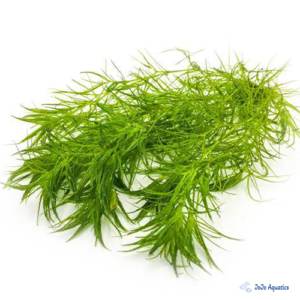
Amazon Sword Care Guide
The Amazon Sword (Echinodorus grisebachii) is the classic background plant: a big, broad-leaved rosette that fills the back of a tank with deep green and gives larger fish somewhere to feel at home. Unlike java fern and anubias, this one is a true root feeder that wants to be planted in nutrient-rich substrate. Give it the right footing and it grows into a centerpiece. This guide covers how to plant and feed it so it thrives.
Quick Stats
- Scientific name: Echinodorus grisebachii
- Family: Alismataceae
- Origin: South America (Amazon basin)
- Care level: Easy to moderate
- Lighting: Medium
- CO2: Not required, but appreciated
- Growth rate: Moderate
- Placement: Background; a centerpiece in smaller tanks
- Adult size: 12–20 inches tall
- Temperature: 72–82°F
- pH: 6.5–7.5
Planting: bury the roots, not the crown
The Amazon sword is a rooted plant, the opposite of our rhizome plants. Plant it in the substrate so the roots are well covered, but keep the crown, the point where the leaves meet the roots, just above the surface. Bury the crown and the plant rots; leave the roots exposed and it cannot anchor or feed. A two-inch or deeper bed of substrate gives the extensive root system room to spread.
Because it grows tall and wide, give it space at the back of the tank. In a smaller aquarium a single specimen makes a striking centerpiece. Mind that the leaves will shade whatever sits behind and beneath it.
Substrate and feeding
This is the key to a happy sword. It is a heavy root feeder, so plain inert gravel or sand alone will starve it. Use a nutrient-rich planted substrate, or push root tab fertilizers into the gravel around the base every month or two. A well-fed sword pushes out large, vibrant leaves; a starved one yellows, develops holes, and stays small. Medium light suits it best, and while CO2 is not required it will grow noticeably faster and fuller with it.
Adjustment and common issues
Amazon swords are often grown emersed (above water) at the farm, so when they go underwater they may melt their old leaves and grow new submersed ones. If leaves turn clear or fall away in the first couple of weeks, that is the plant converting, not dying. Trim the dead leaves and let the new growth come. Yellow leaves with holes later on usually mean a nutrient shortage, most often iron or potassium; root tabs and a complete fertilizer fix it.
Propagation
Mature Amazon swords propagate by sending out runners, long shoots that sprout baby plants (adventitious plantlets) along their length. Once a plantlet has its own few leaves and roots, snip it free and plant it in the substrate as a new sword. A healthy, well-fed plant will produce these on its own without any encouragement.
Ordering from us
Plants ship wrapped damp in an insulated box and travel well in moderate weather. Do not be alarmed if your sword drops some leaves after shipping and replanting; that conversion to submersed growth is normal. Rinse it on arrival, plant it with the crown above the substrate, and add a root tab to get it started. As with any new plant, a quarantine or quick dip is good practice. See our Shipping & Acclimation and Water Chemistry guides for details. Questions? Email help@jojoaquatics.com.
— The JoJo Aquatics team, Key West, Florida